

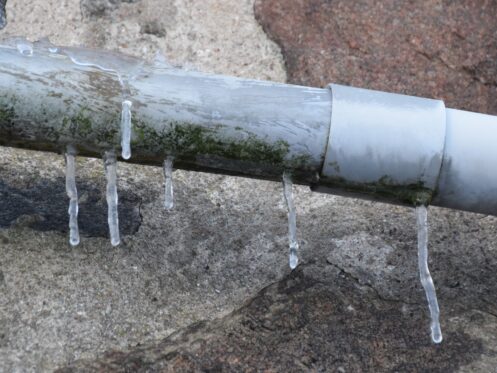
When the air gets cold, most people think about frozen supply pipes, yet drain and sewer lines can struggle too, especially in older homes or houses with shallow plumbing runs. Cold snaps can stiffen grease in kitchen lines, slow down flow, and stress buried pipes when the ground shifts or freezes unevenly. You might notice gurgling, slow drains, or a sink that backs up more often during winter, and those symptoms can hint at a deeper issue than a simple clog.
Grease & Food Waste Turn Into Winter Clogs Faster
Kitchen drains take a special hit during cold snaps because fats and oils change texture when they cool. Think about bacon grease left in a pan. As it cools, it turns from liquid to paste and then to a waxy coating. The same thing can happen inside a drain line. You may rinse a pan, run hot water for a minute, and think it’s all washed away. Once that mix travels into cooler piping, it can thicken and stick. Over a few weeks, that coating narrows the opening and catches everything that passes by. Coffee grounds, rice, starchy water from pasta, and fibrous scraps can then build a coating that slows the line even more.
This is one of the most common winter plumbing issues people deal with because it starts quietly. The sink may drain fine after breakfast, slow down after dinner, and back up during a weekend of heavier cooking. If you smell a sour odor in the cabinet or hear gurgling when the dishwasher drains, the kitchen line may be struggling. A plumber can perform professional drain cleaning to clear the line properly and check whether the pipe has a rough interior, a bad slope, or a partial obstruction that will keep coming back.
Vents & Traps Can Misbehave When Cold Air Takes Over
Your drain system needs air to move water. That is the job of venting. In winter, vents can act up because cold air can chill the vertical stack, and frost can build where warm, moist air meets cold surfaces. When venting doesn’t work right, drains don’t just slow down. They can pull on traps, change water levels in bowls, and create gurgling that seems to come from nowhere. You might notice a bathroom sink that drains with a glug sound, or a tub that drains fine until the toilet flushes, and then the tub makes noise.
Traps can also cause confusion in winter. A trap that sits against an exterior wall can get cold enough that it drains slowly, even if the main line is fine. If a guest bath sits unused, trap water can evaporate and let sewer odor into the room, which feels worse when the house is closed up. A plumber can check venting function, confirm that traps hold water correctly, and identify whether the problem is airflow, a partial clog, or a deeper issue in the main drain.
Frozen Ground Puts Pressure on Buried Pipe Runs
Drain and sewer lines do not have to freeze solid to cause trouble. Cold weather can still stress them through soil movement. When the ground freezes, it can expand and shift. That movement can press on older piping, especially if the line has sections that sit shallow or run through areas with poor drainage. If a pipe already has a small belly, winter can make that low spot hold water longer. If a joint has started to separate, soil movement can open that gap wider. These changes often show up as repeat clogs that clear and return, or as a toilet that seems to flush slower during cold stretches.
This is where sewer line problems in winter can fool you. You may assume you have a simple blockage, yet the real driver could be a pipe that has shifted just enough to trap debris. A camera inspection can show whether the line has a sag, a cracked section, or a joint issue. The fix depends on what the pipe looks like underground, not just what the symptoms feel like at the sink.
What a Frozen Section Looks Like in Drains & Sewers
Freezing can affect drain piping in unheated zones, and it can also affect the building sewer where it runs near the surface. With frozen drain lines, you often see a pattern where one fixture acts up while others still work. A basement shower may back up while a first-floor sink seems fine. A laundry standpipe may overflow when the washer drains, yet the nearby bathroom sink drains normally. In those cases, the affected branch line may be cold enough for ice to form or for slush to narrow the opening. You may also notice that the problem changes during the day. Morning use may feel worse, then the drain seems to recover later when the home warms up.
A frozen sewer line can show up differently. You may see multiple fixtures acting up at the same time, especially on the lowest level. A toilet may bubble when you run the tub. A floor drain may smell stronger and then start taking on water. These signs call for a professional response. Drain and sewer freezing can create pressure in the wrong places, and forcing the system can lead to backups inside the home.
What a Professional Inspection Focuses on During Cold Weather
A winter drain and sewer visit starts with pattern questions: Which fixtures act up first, at what time of day does it happen, and does the issue show up only during cold snaps? Those answers help a plumber decide whether to focus on a branch line in an exterior wall, an unheated run, or the main line. The inspection may include a camera to check for pipe sag, root intrusion, cracked sections, and buildup that has narrowed the line. A plumber can also evaluate venting and confirm whether a vent problem is creating siphon effects that mimic a clog.
When your plumber identifies the cause, the solution becomes specific. They may clear the line with the right equipment, address a structural pipe issue, or recommend repairs that remove the weak spot that keeps triggering backups in cold weather. The goal is to restore dependable flow and to keep the system stable through the rest of winter, so you are not stuck reacting to the same symptoms every time the temperature drops.
Protect Drain Flow Before Winter Turns Into a Backup
Winter drain issues are easier to address before the first big freeze locks problems in place. Professional service can identify partial blockages, sagging pipe sections, venting issues, or early sewer line damage that cold weather can make worse. At Duane Blanton Plumbing, Sewer, Heating & Cooling, we help with drain cleaning, sewer camera inspections, sewer line repairs, root intrusion removal, and emergency response for backups and overflows when winter hits hard.
Schedule a winter drain and sewer check with Duane Blanton Plumbing, Sewer, Heating & Cooling in Round Lake today.