

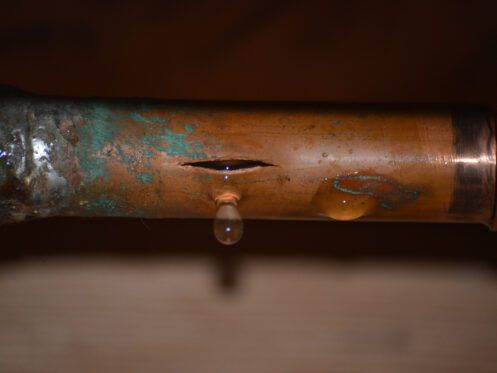
Even under the best of circumstances, Illinois’ famously cold, snowy winters can put stress on your plumbing system. PVC, copper, and steel pipes can get brittle and crack, and their seals and joints can fracture and come loose. Older homes are especially susceptible to hidden leaks behind walls, in basements, and in crawl spaces.
If you notice stains, moist areas, musty smells, or other signs your plumbing is compromised, you may have a hidden leak. Scheduling an inspection with a licensed plumber can help protect your home from thousands of dollars in damage.
Why Colder Weather Leads to Hidden Leaks
Since most of your water lines and pipes are hidden away below ground, behind the walls, and under floorboards, ceilings, and concrete slabs, you may not notice a leak until your water bills spike or you have serious damage to your home. Here are some common factors that can compromise your plumbing during the winter season.
Expanding Ice
When the temperature falls below 32 degrees Fahrenheit, the water inside your plumbing system can turn to ice. As it freezes, the ice expands and creates pressure that can crack or rupture the walls of your pipes. Once temperatures rise and the ice melts, water may burst through these weak points, resulting in a catastrophic leak that can flood your home.
Temperature Fluctuations
During an Illinois winter, temperatures will rise and fall with the sun, and some days will be warmer than others. As your pipes and fittings are exposed to these temperature variations, they will experience thermal contraction and expansion. When the air cools, your pipes will shrink slightly, and when the air warms, they will revert to their normal size.
Over time, these changes put stress on the pipes and their joints, seals, and gaskets, causing wear and tear. Tiny cracks can form when the pipes contract in cold weather, leading to slow leaks that can go unnoticed. By the time you notice staining, soft flooring, or high water bills, you’ll have considerable damage to deal with.
Changes in Water Pressure
Did you know that your water pressure can vary according to the demand in your area? Your municipal water system may make adjustments to the water flow that affect your residential plumbing. Weak spots caused by corrosion or mineral deposits are more likely to fracture as temperatures drop. A sudden increase in water pressure can make older copper or galvanized steel pipes susceptible to leaks.
Increased Stress on Your Water Heater
When the weather cools, the water gets colder, too. This means your water heater must work harder to bring your water to your desired temperature. Doing more work more often (due to an increased demand for hot water) can put strain on your plumbing. If a water line has a fracture, corrosion, or some other weak spot, the extra stress can cause a leak.
Lack of Winterization
Before freezing temperatures set in, you need to winterize your plumbing system. Neglecting to drain your outdoor faucets and sprinkler systems can cause them to ice up and crack. During a thaw, these damaged components may contribute to leaks near your home’s foundation. Uninsulated pipes in crawl spaces, attics, and exterior walls are also vulnerable to freezing. A plumber can install foam pipe sleeves that fully cover exposed areas and protect them from the cold.
Ice Dams
As snow piles up on your roof, it can create ice dams that prevent water from draining properly. If water seeps into ceilings and walls, it may eventually reach your plumbing system. Over time, the excess moisture can degrade your plumbing and cause hidden leaks.
Frost Heave
Hard frosts can cause the ground to shift, also known as frost heave. As the soil moves, it can put stress on your home’s foundation and underground water lines. Consequently, your pipes may experience hairline cracks or broken seals that compromise their integrity.
Signs of a Concealed Plumbing Leak
Hidden plumbing leaks often go unnoticed until they cause obvious harm. Even a small drip can damage your drywall and weaken your pipes over time. As the weather cools, be on guard for these warning signs of hidden leaks:
- Sudden unexplained increase in your water bill
- Low water pressure at your faucet or shower fixture
- Inconsistent hot water delivery
- Hearing running water when your faucets are turned off
- Dampness along pipe joints
- Visible corrosion or white mineral buildup on your pipes
- Musty, lingering odors in your basement or bathrooms
- Peeling paint and bubbling wallpaper
- Discoloration or staining on ceilings, floors, or near toilets
- Soft, spongy, or warped flooring or baseboards
- Damp spots near cabinets
- Cracks in your drywall, tile, or foundation
The Impact of Hidden Leaks
If you think you could have a hidden plumbing leak, contact a plumber right away. Waiting to deal with the problem could cause you to waste thousands of gallons of water. It can also make your home less comfortable and cause extensive structural damage. A seemingly minor leak can saturate your floors, drywall, and framing in less than a day and lead to mold growth. The longer the problem persists, the more expensive it will be to repair.
If you are fairly certain you have a leak, you need to act fast. Follow these steps to minimize damage:
- Shut off the main water supply to stop water from flowing
- Shut off electricity to circuits near the water leak
- Calling a licensed plumber for assistance
- Photograph the damage for insurance purposes
Left unchecked, a hidden leak can cost thousands in mold remediation, drywall and flooring replacement, and other repairs. Taking a proactive approach toward early leak detection can help you avoid a huge headache and a hit to your financial health. A licensed plumber can use specialized tools to inspect your plumbing system and locate hidden leaks.
By using the right technology, your plumber can locate hidden leaks quickly without tearing up your drywall or flooring. After making the necessary plumbing repairs, they can also provide advice that will help you maintain the health of your plumbing.
To Protect Your Pipes This Winter, Call Us Today
Winters in Illinois can be hard on your pipes, but a seasonal plumbing inspection can keep your home safe from harm. At Duane Blanton Plumbing, Sewer, Heating & Cooling, we believe early leak detection is the best way to prevent a plumbing catastrophe. Using specialized equipment and techniques, our experienced plumbers can identify and address small problems before they lead to disaster.
To learn more about our leak detection and plumbing repair services, reach out to our team today.